
Introduction
A polished approval sample proves that a factory can prepare one good unit. It does not prove that thousands of units will use the same battery, hold the same blade alignment, show the same color or arrive with the correct accessories. That difference is why buyers need a product-specific quality plan before mass production begins.
Hair clipper quality control should connect four things: the approved specification, the production process, measurable acceptance criteria and a defined reaction when a result fails. Visual inspection alone is not enough. A clipper may look correct but have abnormal motor current, poor charging behavior, loose guide combs, high blade temperature or a battery that does not reach the agreed runtime. Conversely, a buyer should not demand that every unit receive every long-duration or destructive test. The control plan must combine incoming checks, process controls, routine functional checks, reliability sampling and finished-goods inspection.
This guide gives brands, importers, distributors and e-commerce sellers a practical framework for discussing factory testing and shipment inspection with an OEM/ODM supplier. Exact limits should be based on the final model, intended use and contractual specification.
Quick answer: what should a hair clipper quality inspection include?
A complete hair clipper inspection should cover approved components, blade and motor assembly, charging and battery behavior, switch and display functions, noise and vibration, cutting performance, waterproof claims where applicable, appearance, logo, accessories, packaging, carton condition and quantity. Checks should take place at incoming material, during assembly, after final assembly and before shipment.
For pre-shipment inspection, a buyer may use an acceptance-sampling plan such as ISO 2859-1 and define critical, major and minor defects in advance. AQL sampling is an acceptance tool, not a guarantee that a shipment contains a specific defect percentage and not a substitute for process control.
Quality evidence is also one part of a broader hair clipper manufacturer evaluation; it should be reviewed together with engineering, change control, capacity, compliance support and communication.
Start with an approved product definition
Inspectors cannot judge conformity if the product is not clearly defined. Before production, the buyer and manufacturer should approve a controlled set of references:
- signed product specification;
- bill of materials or controlled critical-component list;
- golden sample;
- color standard and finish tolerance;
- logo artwork, position and process;
- battery, charger, cable and plug details;
- blade and guide-comb specification;
- waterproof or washable claim and test method;
- approved firmware and display logic;
- accessory list;
- packaging artwork and pack-out diagram;
- test methods and acceptance criteria;
- defect classification and inspection plan.
The golden sample is useful, but it should not carry information that belongs in the written specification. A sample may not reveal battery capacity, charging current or internal component revision. The written record and physical sample should support each other.
Convert customer requirements into measurable criteria
“Premium quality,” “quiet motor” and “long runtime” are not inspection criteria. Translate market language into measurable or observable requirements.
Examples include:
- runtime of at least the agreed duration under a defined load and test condition;
- charging indication follows the approved sequence;
- no blade pulling during a defined cutting-medium test;
- guide comb remains attached under the agreed retention check;
- logo position remains within the artwork tolerance;
- housing color matches the approved standard under specified lighting;
- no abnormal noise, intermittent operation or switch failure;
- water-ingress test meets the declared IP method when applicable;
- carton contains the correct quantity and assortment;
- barcode scans and matches the SKU.
When a criterion is subjective, create boundary samples or defect photographs. A scratch that is acceptable on a hidden surface may be unacceptable on the front display area. Visual-zone definitions reduce arguments during shipment inspection.
Stage 1: incoming quality control for critical parts
Incoming inspection is the first opportunity to prevent a component problem from spreading through the production line. Not every part carries the same risk, so controls should focus on items that affect safety, performance, appearance or compliance.
Blades
Check model, material, tooth condition, burrs, corrosion, coating, flatness and critical dimensions. Blade pairs should match the approved system. Sampling may include hardness or dimensional tests when specified. Protect blades from contamination and damage during storage.
Motors
Verify supplier and model, rated voltage, direction, startup behavior, current, speed range where measured, sound and shaft condition. A motor that passes a simple rotation check can still create high current, noise or low cutting torque when combined with the drive system.
Batteries and protection boards
Confirm cell and pack identification, voltage, capacity specification, dimensions, connector polarity, protection function and traceability. Storage state of charge and environmental conditions should be controlled. Any battery substitution requires formal review because it can affect runtime, charging, safety evidence and shipping documents.
PCBs, switches and displays
Inspect revision, programmed function, solder quality, connectors and indicator behavior. If firmware controls speed, battery indication, travel lock or charging logic, revision control is essential.
Plastics, coatings and printed parts
Compare resin, color, texture, dimensions, cosmetic defects, printed-mark adhesion and smell where relevant. Color approval should use a defined light source and reference rather than a phone photograph.
Chargers, cables and plugs
Confirm electrical rating, model, cable length, connector fit, required marks and production evidence. A charger change can affect safety, EMC, labeling and package contents.
Stage 2: first-article and line-start approval
At the beginning of a production run—or after a material, tooling or process change—inspect the first assembled units before full output. This is often called first-article, line-start or setup approval.
The review should confirm:
- correct parts and revisions at the workstation;
- fixture and tool setup;
- blade alignment and moving-blade position;
- fastener torque where controlled;
- wire routing and connector seating;
- switch, lever and housing fit;
- charging and display logic;
- logo and color;
- accessory and packaging version;
- comparison with the golden sample.
If the first units reveal a problem, stop and correct the process before producing a large quantity. A signed line-start record is more valuable than finding the same defect after final packing.
Stage 3: in-process control during assembly
In-process inspection should occur where a defect can still be corrected efficiently. Waiting until the finished-goods table may hide the root cause and create expensive rework.
Mechanical assembly
Check blade-seat cleanliness, moving-part lubrication, spring or pressure components, eccentric drive engagement, lever assembly, housing closure and screw condition. Fixtures can reduce alignment variation when they are verified and maintained.
Electrical assembly
Confirm battery polarity, connector locking, cable routing, PCB protection, switch operation and charging-port alignment. Prevent wires from being pinched by the housing. Apply ESD controls where the electronic design requires them.
Process tests
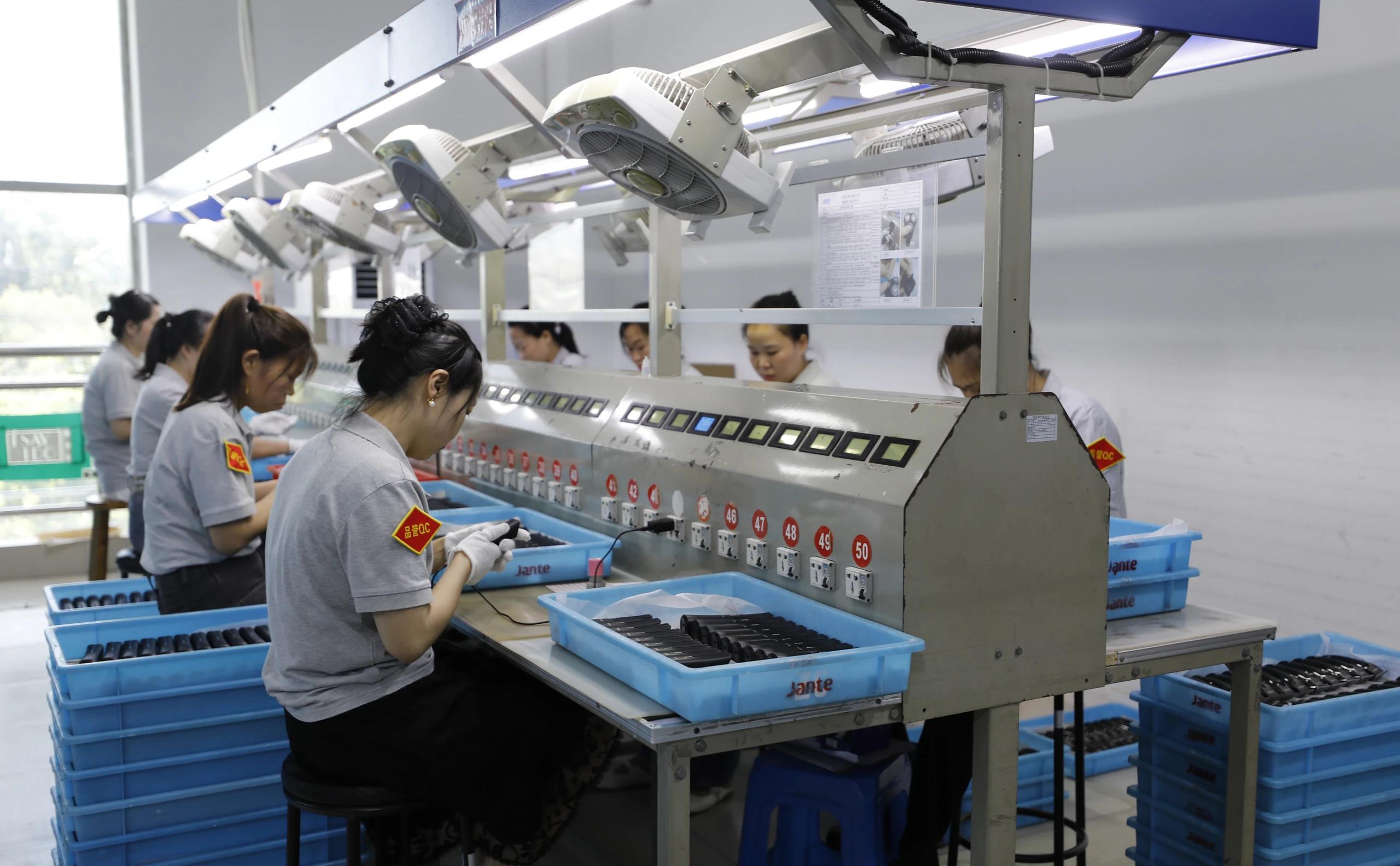
Useful line checks may include power-on, speed selection, travel lock, charge indication, display segments, abnormal sound, vibration and no-load current. The test frequency should match the risk and production capability. Automated or semi-automated fixtures can improve consistency, but fixtures also need calibration or verification.
Traceability and reaction plans
Record production date, line, lot and key component batches as appropriate. When a failure occurs, isolate affected material, identify the time window and investigate the cause. A reaction plan should state who can release, rework or scrap material.
Stage 4: finished-product functional testing
Finished units should receive a defined set of routine tests, supported by longer sampled tests.
Routine function checks
- starts and stops reliably;
- operates at each approved speed;
- display or indicator functions correctly;
- travel lock works where included;
- charging port and cable fit;
- no obvious abnormal sound or vibration;
- blade runs without contact that creates a hazard;
- lever and buttons move correctly;
- attachments fit and release as intended.
Cutting-performance test
Use a consistent test medium and method. Define the number of passes, feed direction and acceptance condition. Human-hair testing may be useful during development, but routine production needs a repeatable, hygienic and safe method. Record blade system, motor mode and state of charge.
Runtime and charging
Do not compare runtime results without defining the condition. No-load runtime, intermittent use and loaded cutting are different. State whether the product begins fully charged, which speed is used and how the endpoint is determined. Sampled charging tests should confirm time, indicator logic and abnormal heating.
Noise, vibration and motor current
Set model-specific limits or approved comparison ranges. A change in sound can indicate blade contact, motor variation or poor assembly even when the unit still operates.
Blade temperature
Measure at a defined ambient temperature, speed, duration and point on the blade. Temperature claims should be based on a repeatable method. A lower reading in one short sample is not enough to support broad marketing language.
Stage 5: waterproof and cleaning-claim verification
“Washable,” “water-resistant” and an IP rating are not interchangeable claims. If a product carries an IP code, testing should follow the applicable standard and product configuration. Routine factory control then needs to protect the design features that made the tested sample pass.
Control points may include:
- seal and gasket model;
- gasket seating and cleanliness;
- housing welding or screw process;
- button and charging-port structure;
- blade-head interface;
- pressure or leak test where designed;
- sampled finished-product water test;
- post-test function and internal inspection.
A charging port left open during cleaning or a removable head can change user instructions. The manual and marketing copy must match the actual tested condition. Waterproof properties should not be repeated elsewhere as an unsupported benefit.
Stage 6: cosmetic, branding and dimensional inspection
Appearance is commercially important for a private-label product. Define inspection distance, lighting and viewing time when practical.
Review:
- housing gaps and step differences;
- scratches, dents, sink marks and flow lines;
- color consistency and gloss;
- fingerprints, oil or debris;
- logo completeness, position and adhesion;
- display-window cleanliness;
- blade finish and corrosion;
- label content, position and durability;
- guide-comb molding and numbering;
- charger and cable appearance.
Divide the product into primary, secondary and hidden visual zones. Create defect examples for recurring concerns. This makes decisions more consistent across the factory and an independent inspection company.
Stage 7: accessory and packaging control
A functional clipper can still create claims if the wrong comb, plug, manual or SKU label is packed. Packaging inspection should verify both presentation and logistics.
Unit pack
- correct product color and model;
- complete accessory set;
- correct guide-comb sizes;
- clean product and protective materials;
- approved manual language and revision;
- warranty or service information where applicable;
- cable, adapter and plug;
- box artwork, barcode and required marks;
- pack-out orientation and protection.
Master carton
- correct quantity and assortment;
- carton dimensions and weight;
- shipping marks and destination information;
- carton strength and closure method;
- internal protection and empty-space control;
- pallet pattern where specified;
- no moisture, crushing or contamination.
Packaging validation may include drop, vibration or compression evaluation based on the distribution route. Installation preparation is minimal for a hair clipper, but market-readiness still requires correct plug, charging instructions, language, barcode and shelf or fulfillment dimensions.
Stage 8: reliability sampling
Long-duration tests are normally performed on samples rather than every unit. The plan can include:
- repeated on/off switching;
- charging and discharging cycles;
- motor endurance;
- blade-running endurance;
- button and lever cycling;
- guide-comb attachment cycles;
- cable bending or connector insertion;
- drop testing;
- packaging transport simulation;
- high/low-temperature storage when relevant;
- waterproof sampling for claimed models.
Define sample size, interval, endpoint and failure response. Reliability testing during development confirms the design; periodic sampling during production monitors continued performance. If the product, component supplier or process changes, review whether validation must be repeated.
Turn your requirements into a test plan
Need to translate target runtime, charging, waterproofing, packaging and appearance into an inspectable specification? Review YEEPUL’s OEM/ODM capabilities and send a product brief for a model-specific discussion.
Stage 9: pre-shipment inspection
Pre-shipment inspection provides an independent or buyer-directed check of finished, packed goods before release. It should happen when enough production is complete and packed to represent the shipment, while time remains for correction.
An inspection brief should identify:
- purchase order and SKU quantities;
- product specification and approved sample;
- sampling standard and inspection level;
- AQL or other acceptance rules;
- critical, major and minor defect definitions;
- special tests and sample quantities;
- packaging, barcode and carton requirements;
- photographs and report format;
- shipment-release authority;
- actions after a failed inspection.
What AQL means
ISO 2859-1 defines sampling schemes indexed by acceptance quality limit for lot-by-lot inspection. A sampling plan selects a sample size and acceptance/rejection numbers from the lot size, inspection level and chosen AQL. The AQL is not permission to intentionally ship defective units, and a passed sample does not prove every unit is defect-free. It is a statistical decision tool with producer and consumer risks.
Do not copy AQL values from an unrelated product without considering safety and commercial risk. Critical defects are commonly handled more strictly than cosmetic minor defects. The buyer, manufacturer and inspection provider should agree the plan contractually.
Suggested pre-shipment test groups
- Quantity and assortment: cartons, units, colors and SKUs.
- Workmanship: housing, blade, logo, labels and cleanliness.
- Basic function: power, speeds, lock, display and charging indication.
- Product performance: defined cutting, current, noise or runtime samples.
- Safety-related checks: agreed critical items and available documentation.
- Accessories: combs, cable, adapter, brush, oil and protective parts.
- Packaging: artwork, barcode, manual, pack-out and carton condition.
- Measurements: product, cable, carton and weight where specified.
- Shipping preparation: marks, battery information and palletization.
How to classify defects
Critical defect
A defect that could create an unsafe condition, violate a mandatory requirement or present another severe risk. Examples must be determined for the product and market; they might include exposed live parts, serious battery damage or a missing mandatory warning.
Major defect
A defect likely to cause product failure, materially reduce usability or make the product unacceptable to the intended customer. Examples may include failure to start, charging failure, blade pulling, wrong adapter, missing key accessory or severe cosmetic damage on the primary surface.
Minor defect
A deviation that does not materially affect function or safety but falls outside the agreed workmanship standard, such as a small permitted-area cosmetic issue. The boundary should be shown with photographs or samples.
Defect classification should be agreed before inspection. Reclassifying defects after seeing the result undermines the plan.
What happens after a failed inspection?
A failure should trigger containment and evidence, not an argument over the summary result. A practical response is:
- hold the shipment;
- identify affected lots and defect patterns;
- investigate root cause;
- sort or rework under an approved instruction;
- verify the correction;
- repeat inspection where required;
- record corrective action for the next order.
If a defect relates to a critical component or compliance evidence, expand the investigation beyond the inspected units. The purchase agreement should state who pays for rework and re-inspection under defined conditions.
A buyer-ready quality checklist
Use this short list before placing the purchase order:
- [ ] Final specification and golden sample approved.
- [ ] Critical components and substitutions controlled.
- [ ] Customer requirements converted to test criteria.
- [ ] First-article approval planned.
- [ ] Incoming and in-process checks documented.
- [ ] Runtime, charging and cutting methods defined.
- [ ] Waterproof claim and test condition confirmed.
- [ ] Appearance zones and defect references agreed.
- [ ] Packaging, manual and accessory versions frozen.
- [ ] Reliability sampling scheduled.
- [ ] AQL plan and defect classes agreed.
- [ ] Shipment inspection timing and release authority confirmed.
- [ ] Failure, rework and re-inspection process written.
Frequently asked questions
Is one golden sample enough to approve production?
It is an important reference but not enough by itself. Use it with a written specification, approved components, artwork, test criteria and change-control process. Multiple samples are useful for evaluating normal variation before mass production.
Should every hair clipper receive a runtime test?
Not necessarily. A full runtime test is time-consuming and may affect production flow. Factories often combine routine electrical and function checks with sampled runtime testing. The frequency and method should reflect the product risk and agreement.
What is the best AQL for hair clippers?
There is no universal best value. The buyer should select sampling and acceptance rules based on safety, defect severity, brand position, order history and contractual risk. Critical defects normally require a stricter approach than minor cosmetic defects.
Can pre-shipment inspection replace factory quality control?
No. Shipment inspection checks a sample of finished goods. It cannot efficiently correct a process that produced widespread defects. Incoming control, line checks and final inspection prevent and detect issues earlier.
How should waterproof models be inspected?
Confirm that the product design and claim have appropriate validation, then control seals, assembly and critical components in production. Use defined routine or sampled tests. Do not improvise a water test that differs from the claimed IP condition.
What should be checked after packaging customization?
Check artwork revision, mandatory information, model and barcode, manual language, color, logo, accessory list, product orientation, protective materials, carton quantity and shipping marks. Test packaging for the expected distribution route.
When should an independent inspector visit?
Schedule the visit when production and packing are sufficiently complete to represent the shipment, but before the shipping deadline. For higher-risk orders, add during-production inspection rather than relying only on the final visit.
Conclusion
Effective hair clipper quality control begins before the production line starts. It requires a frozen product definition, measurable acceptance criteria and a clear link between customer requirements, factory testing and shipment release. Incoming inspection protects critical components. First-article and in-process controls prevent repeated assembly errors. Finished-product and reliability tests verify function. Packaging checks protect market readiness. Pre-shipment inspection provides a final sampling-based decision, but it cannot replace process control.
The most useful quality plan is specific enough to guide action and simple enough to run consistently. When a result fails, the plan should identify the affected lot, response owner and release conditions. That is how a buyer moves from approving one attractive sample to receiving a repeatable commercial shipment.
Discuss a product-specific inspection plan
Share your target model, market, performance requirements, packaging and expected order quantity. YEEPUL can help organize the product specification and manufacturing checkpoints for an OEM/ODM discussion. Contact YEEPUL to send your requirements.